AMD (AMD) Stock Analysis: AI Chip Growth, Q3 Earnings and Market Outlook
Tuesday, November 10, 2026
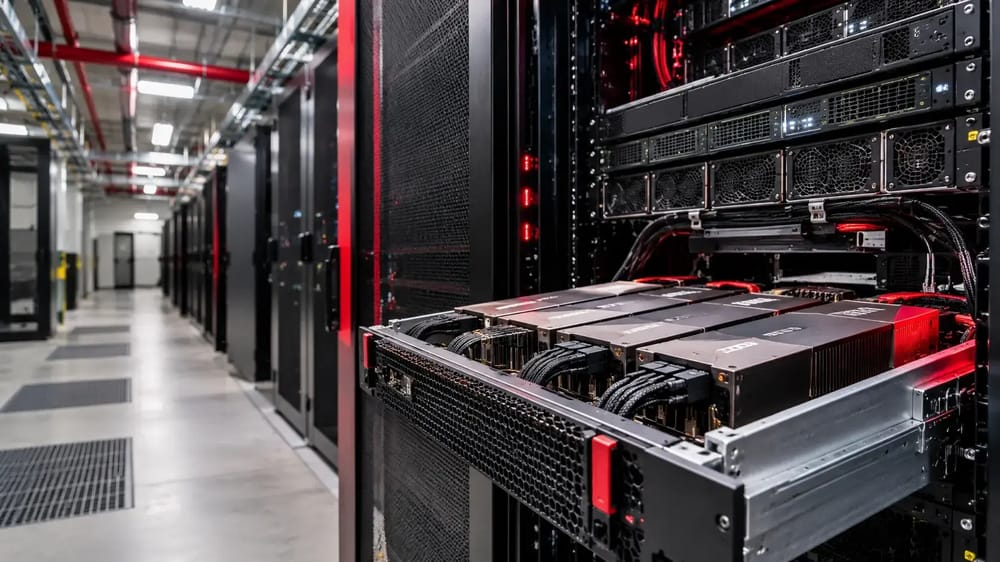
Advanced Micro Devices (NASDAQ: AMD) is gaining investor attention as demand for artificial intelligence infrastructure continues to expand. With growing adoption of its data center processors, Instinct GPUs and strategic partnerships, AMD is positioning itself as an important competitor in the AI semiconductor market.
Its latest third-quarter results provide further insight into this growth, particularly within its Data Center business.
AMD Q3 2026 Earnings: Revenue Reaches $13.4 Billion
AMD reported record third-quarter 2026 revenue of $13.38 billion, representing a 45% increase year over year. Net income reached $2.43 billion, while GAAP diluted earnings per share increased to $1.46.
The company's adjusted financial results were also strong, with non-GAAP diluted earnings per share reaching $2.09, up 74% year over year.
| Financial metric | Q3 2026 | Year-over-year change |
|---|---|---|
| Revenue | $13.38 billion | +45% |
| GAAP net income | $2.43 billion | +95% |
| GAAP diluted EPS | $1.46 | +95% |
| Adjusted diluted EPS | $2.09 | +74% |
| GAAP gross margin | 54% | +2 percentage points |
The results highlight improving profitability alongside growing demand for AMD's computing products.
Data Center Growth Becomes AMD's Biggest Opportunity
AMD's Data Center segment generated a record $8.5 billion in Q3 2026 revenue, increasing 97% compared with the same quarter last year.
Demand for EPYC server processors and Instinct AI GPUs contributed to this performance. These products support cloud computing, enterprise infrastructure and large-scale AI workloads.
AMD is also expanding its Helios rack-scale computing platform, combining processors, accelerators, networking and software into integrated AI infrastructure.
The company's fourth-quarter revenue guidance of approximately $17 billion, plus or minus 3%, reflects expectations for continued growth.
AMD vs. NVIDIA: Competition in the AI Chip Market
Competition with NVIDIA remains one of the most important factors influencing AMD's long-term outlook.
NVIDIA maintains a strong position in AI accelerators and software infrastructure. However, AMD is working to expand its presence through Instinct GPUs, EPYC processors and its ROCm software ecosystem.
AMD's partnerships with major technology companies also strengthen its position. Its collaboration with Meta includes AI infrastructure powered by AMD Helios systems, while its previously announced agreement with OpenAI covers the planned deployment of up to 6 gigawatts of AMD GPUs over multiple generations.
These developments represent significant opportunities, although announced deployments and partnerships do not automatically translate into immediate revenue.
AMD Investor Sentiment and Market Attention
Investor discussions around AMD have increased considerably, with NVIDIA comparisons and CEO Lisa Su appearing frequently in recent conversations.
The latest available 24-hour sentiment snapshot showed:
| Metric | Reported figure |
|---|---|
| Mentions | 217 |
| Change in mentions | +1,708% |
| Upvotes | 731 |
| Change in upvotes | +408% |
| Mentioning users | 177 |
| Change in mentioning users | +1,375% |
| Overall positive sentiment | 75% |
| WSB positive sentiment | 73% |
Frequently discussed keywords included NVIDIA, NVDA, calls, buying, Lisa Su, bullish and long.
The discussion suggests growing interest in AMD's competitive position and AI growth potential. However, social sentiment is not a substitute for financial analysis and should not be interpreted as a prediction of future stock performance.
AMD Growth Opportunities and Key Risks
AMD has several potential growth drivers as demand for AI computing and data center infrastructure expands.
Growth opportunities:
- Increasing adoption of Instinct GPUs for AI workloads.
- Continued demand for EPYC server processors.
- Expansion of the Helios rack-scale platform.
- Strategic partnerships with major technology companies.
- Growth in enterprise and cloud computing infrastructure.
Key risks:
- Strong competition from NVIDIA and other semiconductor companies.
- High expectations surrounding AI-related revenue growth.
- Dependence on manufacturing and advanced semiconductor supply chains.
- Potential delays in product launches and large-scale deployments.
- Market volatility and valuation uncertainty.
The company's ability to maintain its growth rate while improving profitability will remain important for its long-term performance.
AMD Stock Outlook
AMD enters the final quarter of 2026 with strong financial momentum, particularly in its Data Center business. Record quarterly revenue, expanding AI partnerships and growing demand for computing infrastructure provide several reasons for investors to follow the company closely.
However, competition with NVIDIA remains intense, and AMD must continue delivering competitive products while converting its partnerships into sustainable revenue.
Its upcoming product deployments, fourth-quarter financial performance and progress in AI infrastructure will be important developments to monitor.
Disclaimer: This article is for educational and informational purposes only. It does not constitute investment advice or a recommendation to buy or sell any security. Financial results, management guidance, valuation measures and market sentiment can change. Readers should verify current information and conduct their own research before making investment decisions.

Smarter Trading Starts With Clarity
A data-driven approach combining advanced AI, behavioral analytics, and institutional-grade insights to help investors make confident, informed decisions in any market condition.
© Copyright 2025 OVTLYR - All rights reserved.
5830 Granite Pkwy, Suite #100, Plano, TX 75024, USA
Contact now at support@ovtlyr.com