CoreWeave (CRWV) Stock Analysis: AI Growth and Market Outlook
Thursday, October 15, 2026
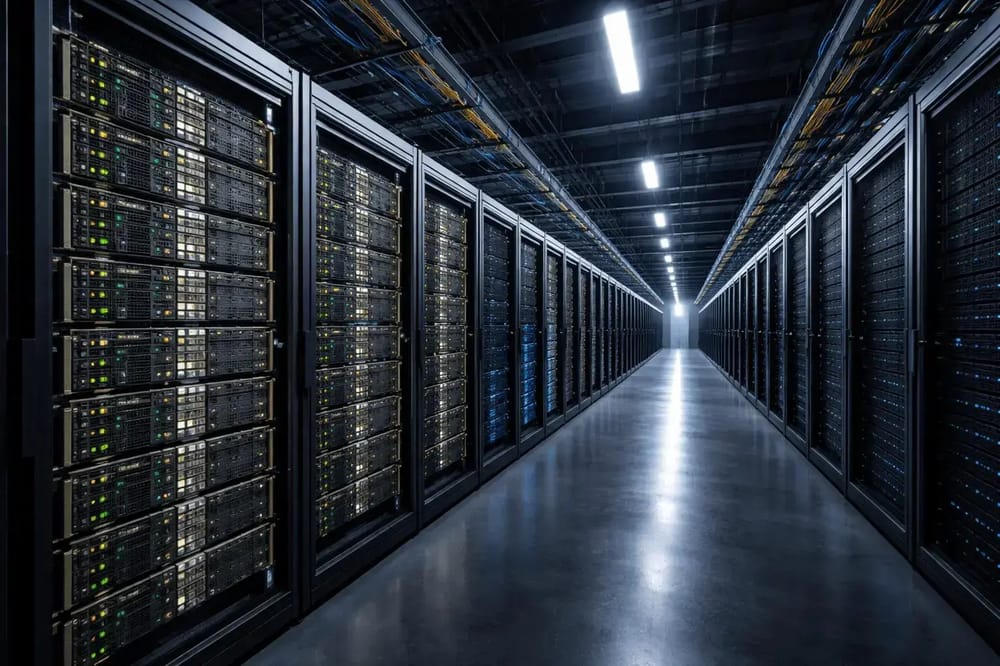
The artificial intelligence industry continues to create demand for specialized computing infrastructure, and CoreWeave (NASDAQ: CRWV) has become an important company to watch in this evolving market. Rather than operating as a traditional cloud provider, CoreWeave focuses on delivering computing resources designed for demanding AI workloads, including model training and inference.
However, growing demand does not automatically translate into sustainable profits. Building and operating AI infrastructure requires significant investment in GPUs, data centers, power, networking, and financing. These costs make CoreWeave an interesting case study in the relationship between AI growth, capital spending, and financial risk.
For investors and market observers, the central question is how effectively the company can convert its expanding business into durable financial performance.
What Does CoreWeave Do?
CoreWeave is a specialized cloud computing company that provides infrastructure for artificial intelligence and other computationally intensive applications. Its services allow customers to access high-performance computing resources without independently building and managing all the necessary infrastructure.
The company's business model centers on providing GPU-powered computing capacity, data center infrastructure, and cloud services that support demanding workloads.
These capabilities are relevant to AI developers, technology companies, research organizations, and enterprises that need substantial computing power to develop or operate AI systems.
Unlike a business that primarily sells software subscriptions, CoreWeave must invest heavily in physical infrastructure. Its ability to expand capacity, secure customers, and manage operating costs therefore plays an important role in determining its financial performance.
Why Is CoreWeave Receiving Market Attention?
Interest in CoreWeave reflects several developments across the AI industry.
Growing Demand for AI Computing
Developing and operating advanced AI models requires substantial computing resources. As businesses explore generative AI, automation, and other applications, demand for specialized infrastructure may continue to expand.
CoreWeave is positioned to serve this demand through its GPU-focused cloud platform. Nevertheless, the long-term opportunity depends on how much customers are willing to spend and whether that demand translates into attractive returns for infrastructure providers.
Expanding Customer Commitments
CoreWeave reported approximately $104 billion in revenue backlog as of June 30, 2026. The company also disclosed more than $25 billion in additional net customer commitments secured in early third-quarter activity, which were not included in that June backlog figure.
These commitments indicate substantial contracted business opportunities. However, a backlog is not equivalent to revenue already earned or cash already collected. Recognizing that value depends on factors including service delivery, infrastructure availability, contract execution, and customer performance.
Investors therefore need to distinguish between the scale of contracted demand and the company's ability to fulfill contracts profitably.
Expansion Into Additional Markets
CoreWeave announced an expansion into India through a partnership with AdaniConneX on October 7, 2026. This development illustrates the company's efforts to extend its AI cloud infrastructure into additional markets.
Geographic expansion can create opportunities to reach new customers, but it also introduces execution requirements involving facilities, capacity, capital, and local operating conditions.
CoreWeave's Financial Performance: Growth Versus Costs
Revenue growth is important, but it does not tell the entire story of a capital-intensive infrastructure business.
CoreWeave's second-quarter 2026 results highlighted strong demand alongside continuing profitability challenges. The company reported an adjusted operating income margin of 5%, compared with 16% in the same quarter of 2025. Its adjusted net loss was approximately $567 million, versus $130 million a year earlier.
These adjusted figures are non-GAAP measures and should not be confused with results calculated under generally accepted accounting principles.
The figures highlight an important issue: increasing demand for AI infrastructure does not necessarily mean that the company is becoming more profitable at the same pace.
Capital Expenditure and Financing
AI infrastructure requires substantial upfront spending. Companies must secure computing equipment, build or expand facilities, establish power capacity, and maintain the infrastructure required to serve customers.
Financing these investments can create additional obligations. Interest expenses, debt repayments, and future capital requirements can affect cash flow even when customer demand remains strong.
Recent reporting on October 15, 2026, highlighted investor concerns about CoreWeave's debt burden and the financing risks associated with the broader AI infrastructure industry.
The market is therefore evaluating not only how quickly CoreWeave can expand, but also how effectively it can finance that expansion and generate sufficient returns.
Why Cash Flow Matters
Cash flow helps explain whether a company can fund its operations and investments without continually increasing its reliance on external financing.
For CoreWeave, investors may pay particular attention to operating cash flow, capital expenditure, interest costs, debt maturities, and the timing of customer payments.
A growing business can still face financial pressure if its infrastructure spending and financing requirements outpace the cash generated from operations.
CRWV Stock and the AI Infrastructure Market
CoreWeave operates in a competitive market that includes established cloud providers and specialized AI infrastructure companies.
Demand for AI computing creates opportunities for multiple businesses, but competition can affect pricing, customer retention, infrastructure utilization, and profitability.
Comparing CoreWeave With NBIS and IREN
Two companies appearing alongside CoreWeave in retail-investor discussions are Nebius Group (NBIS) and IREN.
Nebius is involved in AI infrastructure and cloud computing, while IREN has expanded from its bitcoin-mining background into AI cloud and data-center infrastructure.
These businesses have different operating histories, financing arrangements, customer relationships, and infrastructure strategies. Comparing their share prices or social-media popularity alone does not establish which company has the stronger business model.
A more meaningful comparison considers revenue growth, contracted customer demand, capital intensity, financing requirements, operating margins, and the ability to generate cash.
For investors studying CRWV, the competitive landscape provides useful context for understanding both the opportunity and the risks facing specialized AI infrastructure providers.
What WallStreetBets Sentiment Says About CRWV
Social-media discussions can provide a snapshot of retail-investor attention, but they should be interpreted separately from company fundamentals.
In the ApeWisdom screenshot provided for this analysis, CoreWeave recorded 191 mentions over the previous 24 hours, up 155%, alongside 1,458 upvotes, up 520%, and 138 mentioning users, up 146%. The displayed WallStreetBets sentiment was 61% positive.
These figures represent the supplied snapshot, not a verified live reading.
The combination of increased discussion and a moderately positive sentiment reading suggests that CRWV was attracting attention from retail traders at the time captured. It does not establish whether the stock price was rising or whether the discussion would lead to sustained buying activity.
Interpreting the Nearby Keywords
Several terms in the supplied WallStreetBets keyword list help illustrate the topics appearing in discussions about CoreWeave.
- NBIS and IREN: These terms point to comparisons with other companies involved in AI infrastructure and data-center computing.
- Calls, puts, buy, buying, and bought: These words may reflect options activity, trading positions, or individual opinions. They do not independently establish a bullish or bearish outlook.
- Market and down: These terms may relate to broader market conditions, share-price movements, or discussions about potential losses.
- Still and out: Their meaning depends on the surrounding comments and cannot reliably be determined from keyword counts alone.
- Like and lmao: These informal terms can reflect general reactions, agreement, humor, or sarcasm.
Keyword frequency measures how often terms appear in the tracked discussions; it does not reveal the full reasoning behind each comment.
Social-media sentiment is therefore best treated as a supplementary indicator of investor attention rather than a substitute for financial analysis.
Key Factors That Could Influence CoreWeave's Outlook
Several developments may influence how the market evaluates CoreWeave over the coming quarters.
1. Continued Demand for AI Infrastructure
Sustained demand for AI computing could support revenue growth and infrastructure utilization. However, the financial benefit depends on pricing, customer commitments, service delivery, and operating costs.
2. Debt and Financing Conditions
CoreWeave's ability to finance infrastructure expansion on manageable terms is an important consideration. Higher financing costs or limited access to capital could make future expansion more challenging.
3. Execution and Infrastructure Delivery
Large customer commitments create opportunities, but the company must build and deliver the capacity needed to serve them. Construction delays, power constraints, equipment availability, and implementation costs may affect the timing of revenue and cash generation.
4. Profitability and Cash Generation
Investors will need to assess whether revenue growth eventually produces stronger operating margins and sustainable cash flow. Revenue backlog alone cannot answer that question.
5. Competition and Customer Concentration
Competition from larger cloud providers and specialized infrastructure companies may influence pricing and customer relationships. Dependence on a limited number of major customers can also create exposure if spending plans or contractual arrangements change.
6. Broader Market Conditions
Interest rates, investor appetite for growth stocks, and expectations for AI spending can influence how the market values capital-intensive technology businesses. Even positive company developments may not prevent share-price volatility when broader financial conditions deteriorate.
What Should Investors Monitor Next?
Anyone following CoreWeave should focus on measurable developments rather than attempting to predict the next share-price move from online commentary.
Useful indicators include:
- Quarterly revenue growth and operating margins.
- Operating cash flow and capital expenditure.
- Total debt, interest costs, and financing commitments.
- Changes in revenue backlog and the conversion of contracts into recognized revenue.
- Infrastructure delivery timelines and customer concentration.
- Competitive developments across AI cloud and data-center infrastructure.
- Changes in retail-investor discussion, interpreted alongside company disclosures and broader market conditions.
Together, these factors provide a more complete picture of whether the company's expansion is translating into sustainable financial performance.
Conclusion: Understanding CoreWeave's Market Outlook
CoreWeave represents an important part of the expanding AI infrastructure market. Its specialized computing platform, substantial customer commitments, and expansion efforts provide potential avenues for growth.
At the same time, its capital-intensive business model creates meaningful financial and execution risks. Financing costs, infrastructure spending, profitability, customer commitments, and competition will all influence how effectively the company can turn demand for AI computing into lasting business value.
Retail-investor interest, including the WallStreetBets discussions captured in the supplied ApeWisdom snapshot, adds another dimension to the analysis. However, online sentiment can change quickly and should not be mistaken for evidence of future price performance.
Ultimately, understanding CRWV requires looking beyond trading attention and evaluating the relationship between AI demand, financial obligations, infrastructure execution, and cash generation.
Disclaimer: This article is for educational and informational purposes only. It does not constitute investment advice or a recommendation to buy or sell any security.

Smarter Trading Starts With Clarity
A data-driven approach combining advanced AI, behavioral analytics, and institutional-grade insights to help investors make confident, informed decisions in any market condition.
© Copyright 2025 OVTLYR - All rights reserved.
5830 Granite Pkwy, Suite #100, Plano, TX 75024, USA
Contact now at support@ovtlyr.com