Micron Technology (MU): What Rising Retail Sentiment Is Really Telling Investors
Tuesday, October 06, 2026
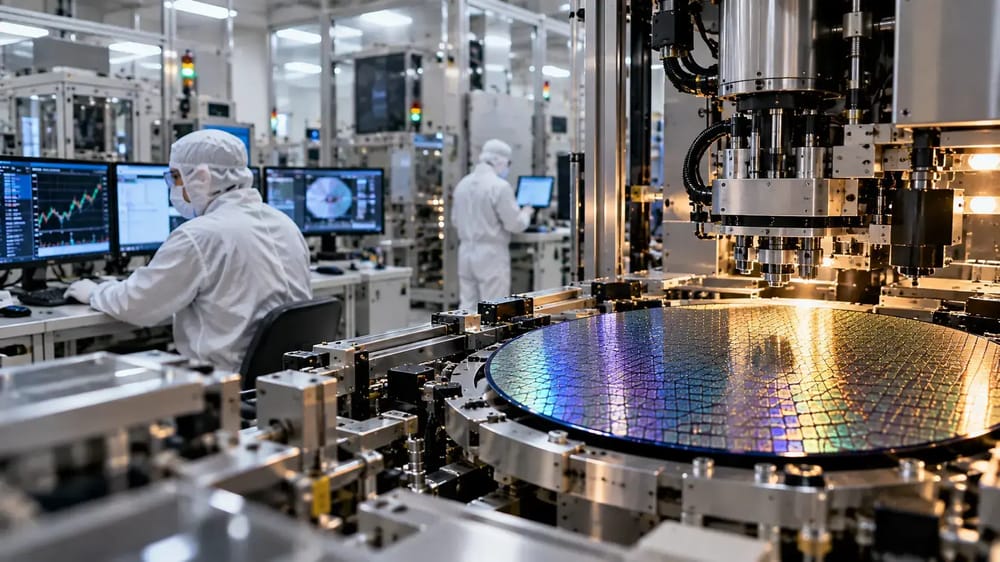
Micron Technology has become one of the most closely watched semiconductor stocks as the artificial intelligence infrastructure boom continues to reshape demand for memory and storage. The company's exposure to high-bandwidth memory, data-center demand, and the broader AI hardware ecosystem has made MU an increasingly important name for investors trying to understand where the semiconductor cycle could be heading next.
But there is another layer to the MU story that investors shouldn't overlook: how the market is talking about the stock.
Recent retail-market activity shows a noticeable increase in attention toward MU. In the latest 24-hour snapshot reviewed for this article, the stock generated 197 mentions, up 105%, while upvotes increased 121% to 508. The number of individual users mentioning MU also rose 71% to 120. Overall sentiment was approximately 63% positive, compared with 37% negative.
Those numbers don't tell us whether MU will go up or down next. They tell us something different: attention and participation around the stock are increasing, while the overall tone of the conversation remains moderately positive.
For investors trying to understand market behavior, that can be useful information - but only when sentiment is considered alongside the company's fundamentals, industry conditions, and expectations already reflected in the stock.
Why Retail Attention Matters
Retail sentiment isn't the same thing as fundamental analysis. A company can have extremely positive discussions online while its financial outlook deteriorates. Likewise, a stock can temporarily become unpopular while the underlying business continues improving.
So why pay attention to retail sentiment at all?
Because markets are ultimately driven by people making decisions. When more investors start discussing a stock, sharing research, debating its valuation, positioning around earnings, or speculating about future demand, that activity becomes part of the market environment.
The important question isn't simply whether investors are saying “buy” or “sell.” It's why they're saying it.
Are they reacting to earnings? Are they expecting stronger demand? Are options activity and short-term speculation increasing? Are investors comparing MU with other semiconductor names such as AMD or SNDK? Are they responding to changes in the AI memory market?
Those questions provide much more useful context than a simple bullish-or-bearish percentage.
MU's Recent Sentiment Shows Increasing Attention
The latest community data around MU is particularly interesting because several measurements are moving in the same direction. Mentions have increased, upvotes have risen, and the number of individual users participating in the conversation has also grown. At the same time, positive sentiment remains higher than negative sentiment.
Taken together, those numbers suggest that MU isn't simply receiving more attention - the conversation around the stock is becoming more active while maintaining a generally constructive tone.
If mentions were increasing while sentiment became sharply negative, the interpretation would be different. It could indicate growing concern, controversy, or a wave of bearish discussion. Instead, the current snapshot shows increased participation alongside moderately positive sentiment.
That doesn't guarantee a rally, and it shouldn't be treated as a trading signal by itself. It simply suggests that more market participants are paying attention to MU and that the current retail conversation is leaning positive.
For investors, that raises a more useful question: What is driving all of this attention?
Earnings Are a Major Part of the Conversation
One obvious reason investors are focused on MU is the company's recent earnings performance and outlook.
Micron reported record fiscal fourth-quarter and full-year 2026 results on September 30. Fourth-quarter revenue reached $54.23 billion, compared with $41.46 billion in the previous quarter and $11.32 billion a year earlier. Full-year fiscal 2026 revenue reached approximately $133.19 billion, compared with $37.38 billion in the prior fiscal year.
The company's forward outlook was also significant. Micron guided fiscal first-quarter 2027 revenue to approximately $61.5 billion, plus or minus $1.5 billion, while its non-GAAP earnings outlook was approximately $38.15 per diluted share.
That helps explain why the stock has become such a major talking point.
Micron is benefiting from a powerful combination of AI infrastructure spending and demand for memory products. Reuters reported that customer commitments under Micron's long-term supply agreements had increased to $32 billion, while remaining performance obligations reached approximately $150 billion. The company also indicated that memory supply-and-demand conditions could remain considerably tighter in fiscal 2027 and 2028.
So when retail investors discuss MU's earnings, they're not necessarily talking about a short-term stock move in isolation. They're debating whether the current AI-driven memory cycle can remain strong enough to support Micron's earnings growth and future expectations.
The AI Memory Story Is Bigger Than MU
Micron's opportunity is closely connected to the broader AI infrastructure buildout.
As AI models become increasingly demanding, data centers require more computing capacity as well as increasingly capable memory systems. High-bandwidth memory has become particularly important for AI workloads, creating a significant opportunity for companies positioned to supply the necessary components.
Micron isn't operating alone in this market. Samsung and SK Hynix are major competitors in memory and high-bandwidth memory, while companies such as AMD participate in other parts of the broader AI semiconductor ecosystem.
That means MU investors are effectively watching several stories at once: AI demand, memory pricing, supply constraints, data-center investment, high-bandwidth memory adoption, manufacturing capacity, and competitive positioning.
This is why simply looking at whether MU is green or red on a particular trading day doesn't tell you very much. The larger question is whether the underlying business environment continues to support the company's growth and whether investor expectations have already priced in a large portion of that opportunity.
What Do “Calls,” “Pump,” and “Moon” Tell Us?
The language surrounding MU is also revealing.
Among the frequently associated retail terms are “calls,” “pump,” “up,” “down,” “green,” “buy,” and “moon.” These words are common in fast-moving trading communities, but they shouldn't all be interpreted in the same way.
“Calls” can refer to bullish options positions, while “moon” generally expresses an expectation of a dramatic upside move. “Pump” can describe the belief that buying activity, enthusiasm, or hype is pushing a stock higher. “Green” simply refers to a positive price move.
None of these words represents an investment thesis by itself.
A post saying “MU to the moon” tells you that someone is enthusiastic. It doesn't tell you whether Micron's valuation is attractive, whether memory supply will remain constrained, or whether the company's next earnings report will exceed expectations.
Retail language is often much better at revealing emotion and conviction than it is at revealing certainty.
That distinction is important when analyzing sentiment data. A large amount of enthusiastic conversation can tell you that investors are excited. It cannot tell you whether that excitement is justified.
Comparing MU With Other Popular Semiconductor Names
Another reason MU deserves attention is its place within a much broader semiconductor conversation.
Retail traders rarely analyze stocks in complete isolation. When MU starts moving, investors may compare it with AMD, Nvidia, SNDK, or other companies exposed to AI, memory, storage, or semiconductor demand.
Those comparisons can influence how investors interpret MU.
If several semiconductor stocks are moving higher at the same time, MU's performance may simply be part of a broader sector rotation. If MU behaves differently from its peers, however, that divergence may become more interesting.
For example, if MU continues strengthening while other semiconductor stocks weaken, investors may begin asking whether Micron is benefiting from a company-specific advantage or whether expectations around the memory cycle are changing.
On the other hand, if MU rises alongside nearly every other semiconductor stock, some of the movement may simply reflect broad market enthusiasm.
The same price move can therefore tell different stories depending on the environment around it.
Context is more useful than the headline move.
Why a Rising Mention Count Isn't Automatically Bullish
It would be tempting to look at MU's rising mention count and conclude that the stock is about to move higher.
That's not what the data proves.
An increase in discussion can happen because investors are excited. It can also happen because investors are worried. A stock can become one of the most discussed names in the market immediately before a major reversal.
That's why mention volume should be treated as an attention signal rather than a directional prediction.
The more interesting combination is attention, sentiment, participation, and fundamental context.
In MU's case, the current snapshot combines increased retail attention with positive sentiment and a strong recent earnings backdrop. That makes the situation worth watching, but it doesn't make the outcome certain.
A useful sentiment dashboard should therefore raise questions rather than pretend to answer them.
What Investors Should Watch Next
For anyone researching MU, the next step shouldn't be trying to predict whether the stock will “moon.” A more useful approach is to identify the fundamental and behavioral factors that could determine whether the current enthusiasm is sustainable.
AI Memory Demand
The first question is whether demand for high-bandwidth memory and data-center memory continues expanding at the pace investors currently expect.
The AI infrastructure buildout has been a major driver of memory demand, and Micron's recent results indicate that the company is entering fiscal 2027 with strong demand visibility.
Supply Conditions
Supply is another important variable. Micron has indicated that memory supply-and-demand conditions could remain tighter in fiscal 2027 and 2028. If that environment persists, it could continue supporting pricing and revenue growth - but investors should also remember that semiconductor markets are cyclical and capacity eventually responds to sustained demand.
Customer Commitments
Long-term customer agreements can provide another window into future demand visibility. Micron said customer commitments under long-term supply agreements had increased to $32 billion, while remaining performance obligations rose to approximately $150 billion.
These figures don't guarantee future stock performance, but they provide important context for understanding why investors are currently paying close attention to the company.
Earnings Execution
Strong expectations create a higher bar.
If Micron continues delivering results that exceed expectations, investor confidence may remain strong. If future results fail to meet increasingly ambitious expectations, sentiment could change quickly even if the company remains fundamentally healthy.
That's one of the risks of highly popular stocks: good results can sometimes be insufficient if investors were expecting exceptional results.
Retail Sentiment
Finally, investors should continue watching the sentiment itself.
Is participation continuing to increase, or does attention begin fading? More importantly, does sentiment remain constructive if the stock experiences a pullback?
A sentiment reading that remains resilient during weakness may tell a different story from one that collapses as soon as price momentum slows.
Don't Confuse “Buy” Talk With an Investment Thesis
Retail communities can be valuable sources of ideas. They can surface companies you may not have considered, highlight unusual options activity, reveal emerging narratives, and show where attention is moving across the market.
But there is a major difference between finding an idea and validating an investment thesis.
A comment saying “buy MU” is an opinion. An analysis explaining why memory demand is increasing, how supply constraints affect pricing, how Micron's earnings are evolving, and what risks could undermine the thesis is something much more substantial.
The same applies to bearish comments.
“MU is going down” is a prediction. Understanding why someone believes that, and whether the evidence actually supports the argument - is the analytical work that matters.
This distinction is particularly important when a stock becomes popular. The more attention a ticker receives, the easier it becomes for investors to mistake popularity for confirmation.
Popularity tells you that people are interested.
It doesn't tell you that they're right.
What MU's Sentiment Really Tells Us
The current sentiment picture around Micron is interesting because it isn't overwhelmingly one-sided.
Approximately 63% of the observed sentiment is positive, while 37% is negative. That's bullish-leaning, but it isn't an extreme reading. At the same time, mentions have increased approximately 105%, upvotes have risen 121%, and the number of participating users has increased 71%.
Taken together, those measurements suggest that the market is paying considerably more attention to MU and that the conversation currently leans positive.
But there is an important distinction between attention, conviction, and certainty.
More people talking about a stock doesn't necessarily mean more people understand it. Higher sentiment doesn't guarantee higher future returns. And increasing participation can sometimes make a market more volatile rather than more predictable.
The real value of the data is therefore not in predicting what MU will do tomorrow. It's in showing that something has changed in how investors are engaging with the stock.
That change deserves investigation.
The Bigger Lesson for Investors
MU provides a useful example of why modern market analysis requires more than a price chart.
Price tells you what the market has already done. Fundamentals help explain the underlying business. Earnings reveal financial performance and management expectations. Sector analysis provides broader context. And sentiment can show how investors are reacting to all of it.
None of these signals should be treated as a standalone answer.
The real value comes from putting them together.
That's particularly important with stocks connected to powerful narratives such as artificial intelligence. When enthusiasm is high, investors can become focused on the upside story and overlook valuation, competition, supply constraints, or changing expectations.
The opposite can happen when sentiment turns negative. Investors can become so focused on short-term fear that they overlook genuine improvements in the underlying business.
Good analysis requires both sides of the story.
Final Thoughts: Is MU Worth Watching?
Micron Technology currently sits at an interesting intersection of AI infrastructure, memory demand, strong earnings performance, and rising retail attention.
The latest community sentiment snapshot shows increased participation and a positive lean, while Micron's latest financial results and outlook provide fundamental reasons for investors to remain interested. The company reported record fiscal 2026 revenue of $133.19 billion and guided fiscal Q1 2027 revenue to approximately $61.5 billion, while management highlighted strong AI-driven demand and continued investment in technology and manufacturing.
But the most useful takeaway isn't that investors should immediately buy MU.
It's that MU is a stock where sentiment and fundamentals are currently interacting in a particularly visible way.
The retail conversation can tell us where attention is flowing. The company's financial results can tell us whether the business is delivering. The broader AI and semiconductor environment can help explain why expectations are changing. And the stock price ultimately shows how the market is translating all of that information into action.
That's the bigger lesson. Don't just ask whether MU is up or down.
Ask why investors are talking about it. Ask whether the excitement is supported by the business. Ask whether sentiment remains constructive when the stock isn't green. Ask whether the expectations embedded in the stock price leave enough room for the company to continue surprising investors.
And when someone says MU is going to the moon, don't automatically dismiss the enthusiasm - but don't confuse enthusiasm with analysis either.
The most useful signal isn't always the loudest one. It's the one that still makes sense when you look at the entire picture.

Smarter Trading Starts With Clarity
A data-driven approach combining advanced AI, behavioral analytics, and institutional-grade insights to help investors make confident, informed decisions in any market condition.
© Copyright 2025 OVTLYR - All rights reserved.
5830 Granite Pkwy, Suite #100, Plano, TX 75024, USA
Contact now at support@ovtlyr.com