SanDisk (SNDK) Stock Analysis: Key Trends and Market Outlook
Monday, October 12, 2026
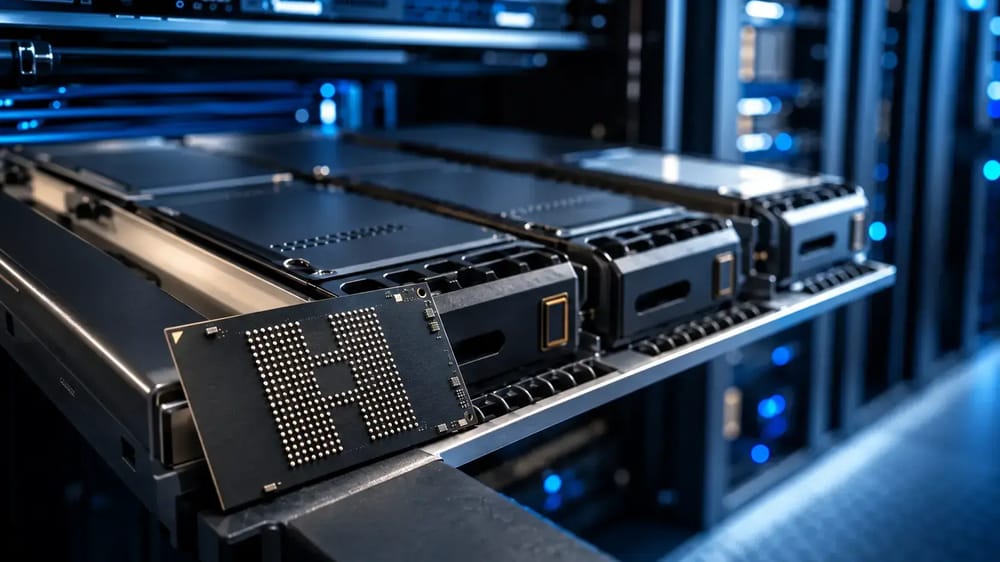
SanDisk Corporation (NASDAQ: SNDK) has become an important company to watch as demand for flash storage grows alongside artificial intelligence, cloud computing, and data-center infrastructure. Its recent financial results show substantial revenue growth, but changing semiconductor market conditions are also raising questions about pricing, competition, and the sustainability of current profit margins.
On October 12, 2026, SanDisk shares moved lower alongside other memory and storage-related stocks. The broader sector faced renewed concerns about competition, market valuations, and whether the exceptional profitability reported by memory manufacturers can continue. These developments have brought attention back to the relationship between AI-driven storage demand and the cyclical nature of the memory industry.
Understanding SNDK requires looking beyond daily price movements. The company's financial performance, enterprise storage business, NAND flash pricing, competitive environment, and upcoming earnings report all provide useful context for evaluating its market outlook.
What Does SanDisk Do?
SanDisk designs and supplies flash memory and storage solutions used across consumer devices, enterprise systems, and data-center infrastructure. Its products include solid-state drives (SSDs), memory cards, and other NAND flash-based storage solutions.
NAND flash is a type of non-volatile memory that retains information even when power is removed. It is widely used in devices that require persistent data storage, from laptops and smartphones to enterprise servers.
SanDisk's position in the market has become particularly relevant as businesses invest in AI infrastructure. Training and running AI models involves processing and storing large amounts of data, creating demand for storage systems that can handle increasingly demanding workloads.
However, SanDisk's business is not limited to AI. Consumer electronics, enterprise computing, edge devices, and other storage applications also contribute to demand. Understanding these different markets helps explain why the company's results can change as customer spending and memory prices evolve.
Why Is SanDisk Attracting Market Attention?
SanDisk's recent financial performance is a major reason investors are following the company.
For fiscal fourth-quarter 2026, SanDisk reported revenue of approximately $8.97 billion, up 51% from the previous quarter. Revenue for the full fiscal year reached approximately $20.25 billion, representing 175% year-over-year growth.
The company also reported a GAAP net income of approximately $6.90 billion for the fourth quarter and $11.43 billion for the full fiscal year. Its results reflected a combination of higher pricing, stronger volumes, and a shift toward higher-value customers.
Data-center revenue was a particularly important contributor. The segment generated approximately $2.98 billion in the fourth quarter, compared with $1.47 billion in the previous quarter. For the full fiscal year, data-center revenue reached approximately $5.15 billion, up 437% year over year.
These figures illustrate how quickly the company's business has expanded. However, strong historical results do not automatically establish what the stock should be worth today. Investors must also consider how much growth is already reflected in the share price and whether current business conditions can support similar performance in future quarters.
How AI Infrastructure Supports Storage Demand
Artificial intelligence requires more than advanced processors. AI systems also depend on storage infrastructure to retain datasets, model information, application data, and other information needed by computing workloads.
As cloud providers and enterprises expand their AI capabilities, they may invest in additional storage capacity and faster storage systems. Enterprise SSDs can play an important role in these environments because they provide persistent storage with performance characteristics suited to many data-intensive applications.
SanDisk has identified data-center products as a significant growth area. Its recent results demonstrate that demand from this market has become a more substantial part of its revenue.
Nevertheless, AI investment does not guarantee uninterrupted growth for storage manufacturers. Data-center spending can fluctuate, customers can adjust purchasing schedules, and different workloads require different combinations of storage technologies.
The important question is whether AI-related demand can continue supporting SanDisk's revenue and margins as the industry develops. Investors should look for evidence in reported results, customer demand, and management's forward guidance rather than assuming that every increase in AI spending translates directly into higher earnings for the company.
NAND Flash Pricing and the Memory Market Cycle
NAND flash pricing is one of the most important factors to understand when evaluating SanDisk.
Memory manufacturing is a cyclical industry. Prices can rise when demand exceeds available supply, improving revenue and margins for manufacturers. When supply expands or customer demand weakens, pricing can come under pressure and profitability may decline.
SanDisk's fiscal fourth-quarter results illustrate the importance of pricing. Revenue increased 51% sequentially, and the company indicated that approximately two-thirds of the sequential increase came from higher pricing, with the remainder coming from higher volumes.
This distinction matters because revenue growth driven by pricing can behave differently from growth driven primarily by unit demand. If favorable pricing conditions continue, profitability may remain strong. If supply catches up with demand or customers reduce purchases, the same business can face pressure even when its products remain relevant.
Investors therefore need to monitor both the volume of storage products sold and the prices customers are willing to pay. Looking at revenue alone may not reveal whether the company's growth is becoming more durable or remains heavily dependent on the current memory cycle.
Why SanDisk and Micron Often Move Together
SanDisk and Micron Technology (NASDAQ: MU) are frequently discussed together because both are exposed to the broader memory industry. However, their product portfolios are not identical.
SanDisk focuses on NAND flash and storage products, while Micron has a significant presence in DRAM as well as NAND memory. Both companies can be affected by changes in semiconductor demand, manufacturing capacity, customer spending, and investor expectations.
On October 12, memory-related shares came under pressure after developments involving Chinese memory manufacturer ChangXin Memory Technologies (CXMT) raised concerns about future competition in the sector. Micron, SanDisk, and other memory or storage-related companies declined during the session.
The market reaction illustrates how news affecting one part of the memory industry can influence sentiment toward related companies. Investors may reconsider assumptions about future pricing, competition, and industry profitability across multiple stocks at once.
However, CXMT's progress in DRAM should not be interpreted as direct evidence that SanDisk's NAND business is facing the same competitive threat. The technologies and market segments differ. The broader concern is whether increased competition and future supply expansion could eventually affect pricing or investor expectations across the wider memory industry.
For SNDK, the practical questions remain focused on NAND supply and demand, customer requirements, enterprise storage growth, and the company's ability to maintain its competitive position.
What SanDisk's Latest Earnings Guidance Means
SanDisk's guidance provides another useful reference point for evaluating its outlook.
Following its fiscal fourth-quarter results, the company projected fiscal first-quarter 2027 revenue of $10.30 billion to $10.80 billion. It also forecast non-GAAP diluted earnings per share of $44 to $46.
These figures indicated management's expectation of continued strong financial performance. However, guidance is a forward-looking estimate, not a guarantee of results.
Investors will want to see whether the company achieves its projected revenue range and how its margins develop. They will also be looking for information about demand across data-center, edge, and consumer markets.
The next earnings report is scheduled for October 29, 2026, according to the company's September announcement. That report should provide an updated view of revenue, profitability, and management's expectations for the following quarters.
Ahead of earnings, market participants may adjust their positions based on their expectations. A stock can move even when a company reports strong results if those results fall short of what investors had already anticipated.
Is SNDK Oversold, or Is the Market Reassessing Expectations?
When a stock experiences a sharp decline, investors often ask whether it has become oversold or whether the move reflects a meaningful change in its outlook.
An oversold condition is generally assessed using technical indicators, such as the relative strength index (RSI), alongside price action and trading volume. A price decline by itself does not establish that a stock is oversold, and technical conditions do not guarantee a rebound.
For SanDisk, the question is particularly relevant because its recent financial growth has been accompanied by elevated expectations about future profitability.
Some investors may view a pullback as an opportunity to reassess the company's long-term prospects. Others may prefer to wait for additional evidence from earnings, pricing trends, and sector developments.
Both approaches involve uncertainty. A stock that has declined can recover, but it can also continue falling if expectations change further. Investors should therefore distinguish between a temporary shift in sentiment and a deterioration in the company's underlying business.
A more complete assessment combines technical indicators with financial performance, valuation, NAND pricing, and the competitive environment.
What Could Influence SanDisk's Market Outlook?
Several developments are worth monitoring as investors assess SNDK's next phase.
1. Upcoming earnings results
The October 29 earnings report should provide updated information about revenue, margins, and management's expectations. Results that differ materially from market expectations could influence how investors value the business.
2. NAND flash pricing
Changes in NAND pricing can affect SanDisk's revenue and profitability. Investors should watch whether favorable pricing conditions persist and whether volume growth supports the company's financial performance.
3. AI and data-center investment
Continued spending on AI infrastructure could support demand for enterprise storage. However, changes in capital expenditure plans or customer purchasing schedules could affect the pace of growth.
4. Industry competition
Developments involving other memory manufacturers may influence future supply and pricing. Investors should distinguish between direct competition in NAND and broader sector developments involving DRAM or other technologies.
5. Valuation and market expectations
Even strong companies can experience share-price volatility when expectations are elevated. Future returns depend not only on business growth but also on the price investors pay relative to the company's expected financial performance.
Together, these factors provide a more useful framework for evaluating SanDisk than relying on online sentiment or short-term price movements alone.
The Bottom Line on SanDisk (SNDK)
SanDisk's recent financial results demonstrate substantial growth, particularly in data-center storage, while its fiscal 2027 guidance points to continued strong revenue expectations. These developments highlight the company's role in the expanding storage requirements of AI and enterprise computing.
At the same time, the memory industry remains cyclical. NAND pricing, changing supply conditions, competition, customer spending, and investor expectations can all influence the company's future results and share price.
The recent weakness across memory-related stocks illustrates why investors need to separate company fundamentals from broader market sentiment. A strong business can experience a pullback, while positive online discussion does not guarantee that its shares will rise.
Ultimately, SanDisk's market outlook will depend on whether its storage demand, pricing environment, and financial performance remain strong as industry conditions evolve. Its upcoming earnings report should provide another opportunity to assess how the company is progressing against those expectations.
Educational Disclaimer
This article is for educational and informational purposes only. It does not constitute investment advice or a recommendation to buy or sell any security.

Smarter Trading Starts With Clarity
A data-driven approach combining advanced AI, behavioral analytics, and institutional-grade insights to help investors make confident, informed decisions in any market condition.
© Copyright 2025 OVTLYR - All rights reserved.
5830 Granite Pkwy, Suite #100, Plano, TX 75024, USA
Contact now at support@ovtlyr.com